

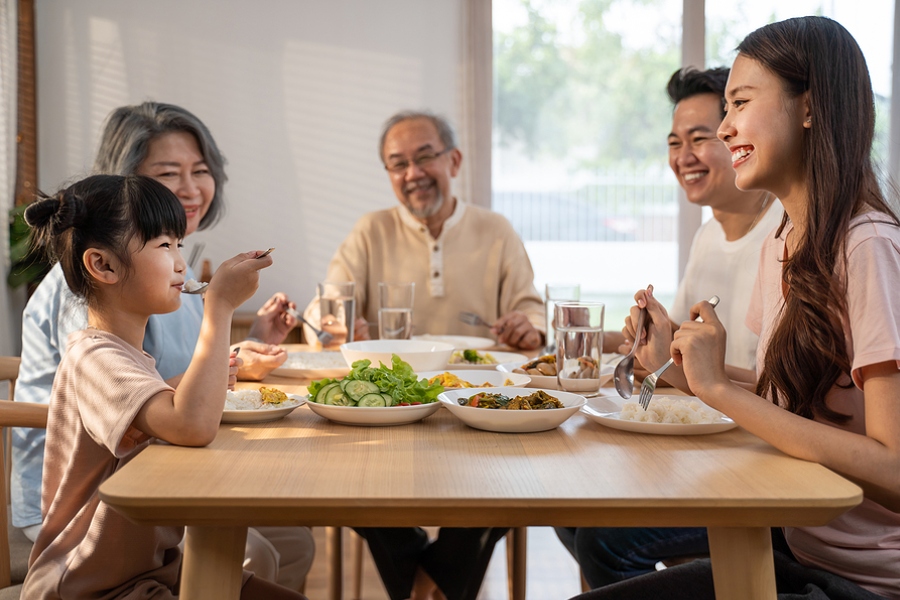
Most of us grew up hearing that we should eat a balanced diet, but when you are standing in the kitchen at 7pm with tired kids and a long to-do list, that advice can feel a little abstract. What does a balanced meal actually look like on a real plate, for a real family, on a real weeknight?
The honest answer is that it does not need to be elaborate or Instagram-worthy. A balanced meal is simply one that gives your family the right mix of nutrients to feel full, function well, and stay healthy over time. Once you understand the basic building blocks, putting them together becomes much more instinctive.
The four things every family meal should have
A well-rounded meal covers four key components: a carbohydrate for energy, a protein source for growth and repair, vegetables for fibre and micronutrients, and a small amount of healthy fat. That is it. When all four are present, you are doing well.
Locally, this translates quite naturally. A plate of brown rice with steamed fish, stir-fried kai lan, and a drizzle of sesame oil covers all four bases. So does a bowl of ban mian loaded with vegetables and a soft egg. Even a hawker meal of chicken rice, when you add a side of vegetables and skip the extra skin, can come fairly close.
The problem most families run into is not a lack of knowledge but a lack of time. When dinner is a last-minute call to Foodpanda or a quick stop at the kopitiam, balance tends to be an afterthought.
Getting the portions roughly right
You do not need to weigh every ingredient or count calories. A practical guide many nutritionists and health bodies recommend is the My Healthy Plate model from the Health Promotion Board, which suggests filling half your plate with fruit and vegetables, a quarter with wholegrains, and a quarter with protein.
For families with young children, this is a useful visual to keep in mind. Kids do not need enormous portions, but they do need variety. Some families find that a lunch Tingkat a few days a week helps keep this variety consistent without extra effort. Rotating between different proteins — fish one night, eggs the next, tofu the night after — helps ensure they are getting a broader range of nutrients without you having to overthink it.
Where families tend to fall short
Vegetables are the most common gap. Many children, and honestly quite a few adults, do not eat enough of them. The easiest fix is to make vegetables less optional by weaving them into dishes rather than serving them separately as a side that gets ignored. Throw spinach into a soup, add shredded carrots into a fried rice, or blend pumpkin into a curry. They are there, they add nutrition, and nobody has to negotiate over them at the table.
Sodium is another area worth watching. According to HPB’s National Nutrition Survey 2019, the average daily sodium intake among Singaporeans was around 3,480mg, roughly 1.5 times higher than the level recommended by the WHO. Much of this comes from sauces, condiments, and processed foods that creep into everyday meals.
Cooking at home more often, or choosing meal options prepared with less salt, makes a meaningful difference over time, especially when you think about why no MSG and less salt matter in the long run.
Practical balance for busy families
The goal is not perfection at every single meal. A useful way to think about it is balance across the day, or even across the week. If breakfast was toast and kaya, make sure lunch has decent protein. If one dinner was a little heavy on the fried stuff, the next one can be lighter and more vegetable-forward.
Some families batch-cook on weekends or keep a few reliable hawker orders in rotation that they know cover the basics. Others find that a Tingkat delivery arrangement a few days a week takes the mental load of planning entirely off, since the cooking, portioning, and variety are already taken care of.
What matters more than any single meal is the overall pattern. Children who grow up eating a variety of foods, including vegetables, different proteins, and wholegrains alongside the occasional treat, tend to develop healthier relationships with food as they grow.
Feeding your family well without the fuss
Balanced eating for families is really about building a rhythm that works for your household. Small, consistent choices add up far more than the occasional effort at a perfect meal. If you are looking for one less thing to think about at dinnertime, Kim Paradise serves home-cooked Tingkat meals that bring warmth, variety, and a little more balance to your family table.


