

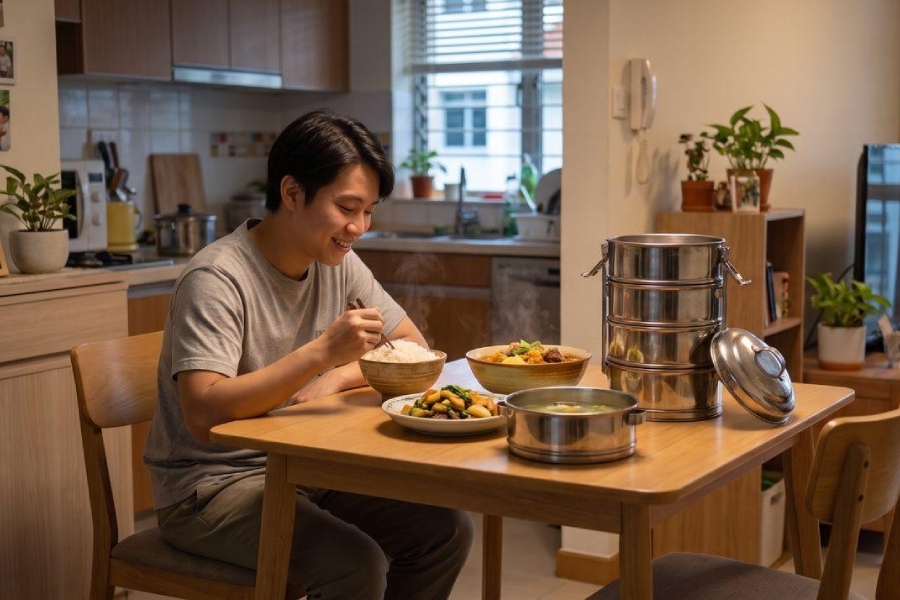
Cooking a proper meal for one can feel like more effort than it deserves. You buy a bunch of vegetables, use half, and watch the rest wilt in the fridge. By the time you have shopped, chopped and washed up, ordering in or skipping dinner altogether starts to look tempting. For the growing number of Singaporeans living on their own, eating well day after day is a real challenge, not a lack of willpower.
The good news is that solo dining can be simple and satisfying with a few practical habits. Eating for one does not have to mean instant noodles at the counter or the same takeaway on repeat.
Why eating for one is tricky
Several things make solo meals harder than they look. Groceries are often packaged for families, so food goes to waste. Recipes are written for four, which means constant leftovers or fiddly maths. And when no one else is waiting for dinner, it is easy to let mealtimes slide. None of this means you cannot eat well. It simply means the usual advice, written with families in mind, does not always fit.
Simple habits for eating well alone
A few small shifts make solo eating far more manageable:
- Cook once, eat twice, by making a slightly larger portion and saving half for the next day
- Keep versatile staples on hand, such as eggs, tinned beans, frozen vegetables and rice
- Buy loose produce from the wet market or supermarket so you take only what you need
- Give yourself a proper sit-down meal now and then, away from the laptop and the sofa
Building a rhythm around these habits helps you eat healthier without giving up the pleasure of good food, even when you are catering for one.
When cooking is not on the cards
Some days, cooking simply will not happen, and that is where a little outside help earns its place. A healthy meal delivery can quietly fill the gaps on the busiest evenings, bringing a balanced spread of rice, vegetables and protein to your door without any of the planning or clearing up. For someone living alone, that can be the difference between a nourishing dinner and a packet of biscuits eaten standing up.
Portion-friendly options suit solo diners especially well, since you are not left with three days of the same dish. Home-style meals prepared with less oil and salt also make it easier to keep things balanced when you are not measuring everything yourself.
Beating the leftovers rut
One reason solo cooks give up on batch cooking is the dread of eating the same thing four days running. A little variety solves it. Cook a versatile base such as a pot of rice, some plain protein or a tray of roasted vegetables, then dress it up differently each day with a fried egg, a splash of sauce, or a handful of fresh greens. Freezing single portions is another quiet lifesaver, turning one evening’s effort into three or four ready meals for the weeks ahead. That way, a home-cooked dinner is only a quick reheat away, even on the nights when you walk in exhausted.
Making solo meals something to look forward to
Eating alone need not feel like a chore or an afterthought. Plating your food properly, sitting at the table and setting aside your phone can turn a quick dinner into a small, restful ritual. Some people enjoy the freedom of cooking exactly what they fancy, while others like the calm of a meal that is already sorted. A useful reference point is the Health Promotion Board’s quarter, quarter, half guide, which makes it easy to picture a balanced plate whether you are cooking or ordering in.
Eating well, party of one
Living on your own comes with real freedom, and how you eat can be part of the joy instead of a daily hassle. With a few simple habits and the occasional helping hand, a good meal for one is well within reach on even the busiest week. Whenever the fridge is bare and the day has been long, Kim Paradise is here to bring a warm, home-cooked dinner to your table, so eating well never feels like hard work.


